By GU Qing (Susan Gu)
Originally published in the Journal of Chinese Medicine in the UK, 2025, Volume 14, Issue 2, pp. 33–36.
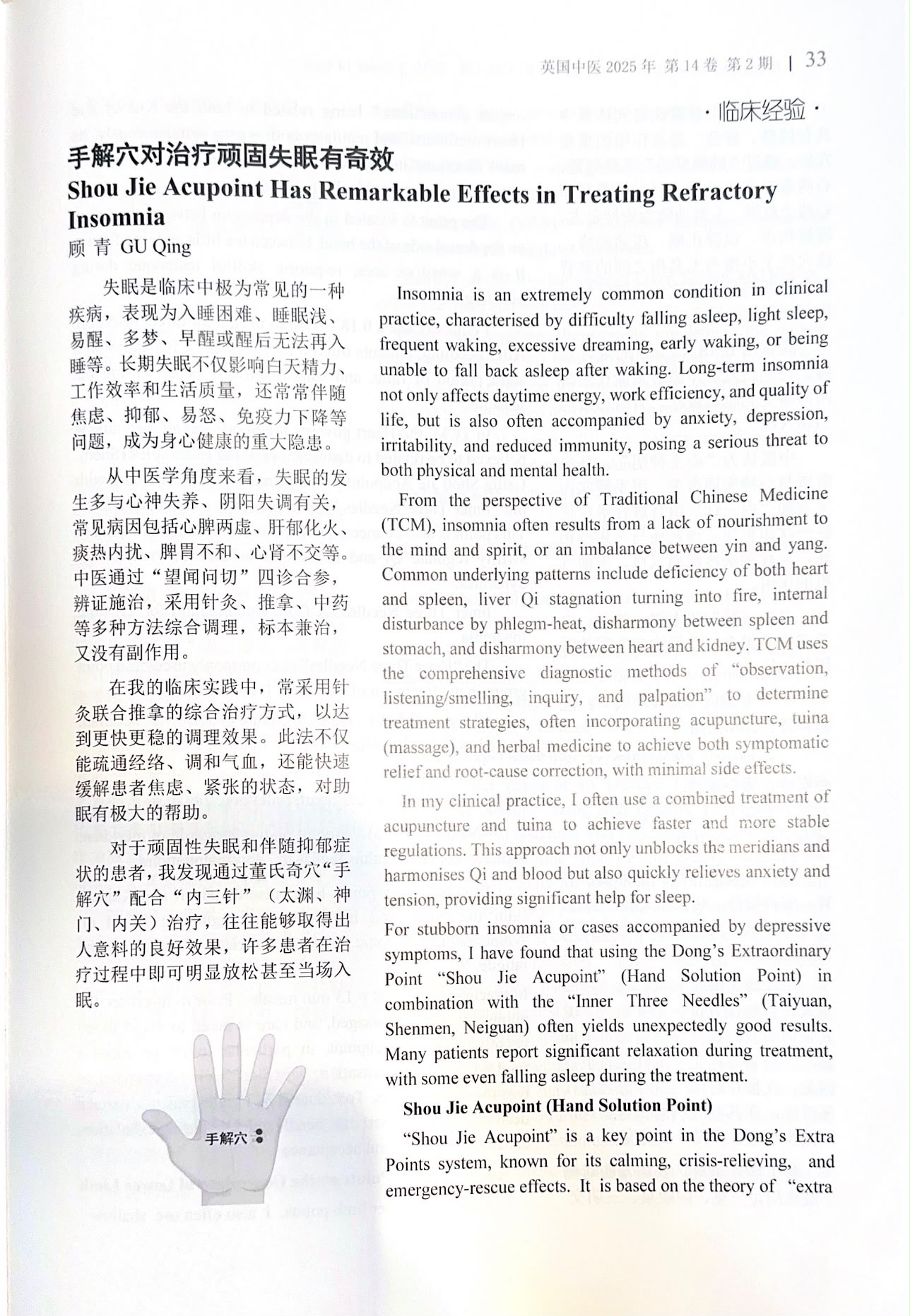
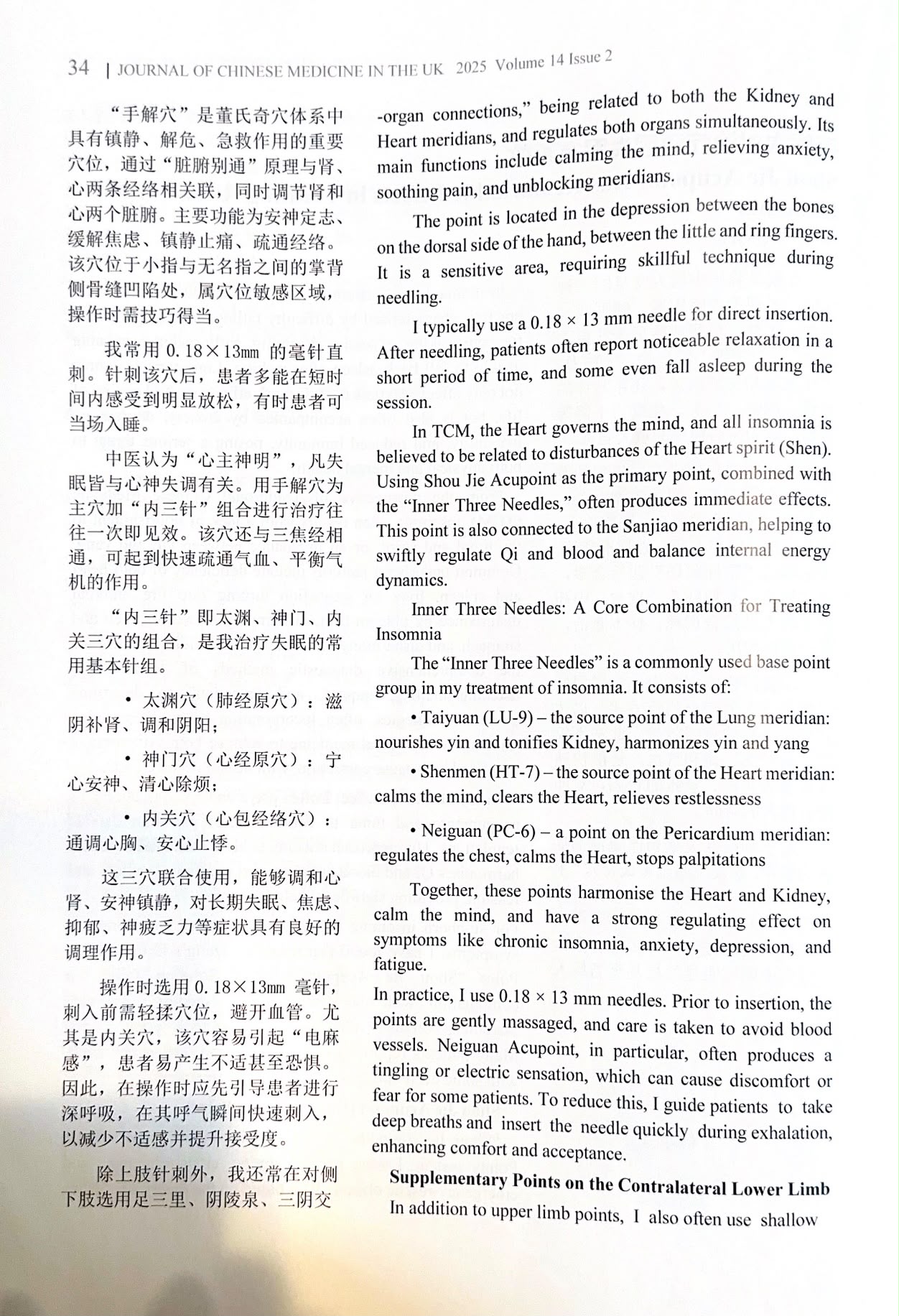
Publication Note: The article below is reproduced in its originally published English. Scans of the original publication are provided at the end of this article for reference.
Insomnia is an extremely common condition in clinical practice, characterised by difficulty falling asleep, light sleep, frequent waking, excessive dreaming, early waking, or being unable to fall back asleep after waking. Long-term insomnia not only affects daytime energy, work efficiency, and quality of life, but is also often accompanied by anxiety, depression, irritability, and reduced immunity, posing a serious threat to both physical and mental health.
From the perspective of Traditional Chinese Medicine (TCM), insomnia often results from a lack of nourishment to the mind and spirit, or an imbalance between yin and yang. Common underlying patterns include deficiency of both heart and spleen, liver Qi stagnation turning into fire, internal disturbance by phlegm-heat, disharmony between spleen and stomach, and disharmony between heart and kidney. TCM uses the comprehensive diagnostic methods of “observation, listening/smelling, inquiry, and palpation” to determine treatment strategies, often incorporating acupuncture, tuina (massage), and herbal medicine to achieve both symptomatic relief and root-cause correction, with minimal side effects.
In my clinical practice, I often use a combined treatment of acupuncture and tuina to achieve faster and more stable regulations. This approach not only unblocks the meridians and harmonises Qi and blood but also quickly relieves anxiety and tension, providing significant help for sleep.
For stubborn insomnia or cases accompanied by depressive symptoms, I have found that using the Dong’s Extraordinary Point “Shou Jie Acupoint” (Hand Solution Point) in combination with the “Inner Three Needles” (Taiyuan, Shenmen, Neiguan) often yields unexpectedly good results. Many patients report significant relaxation during treatment, with some even falling asleep during the treatment.
Shou Jie Acupoint (Hand Solution Point)
“Shou Jie Acupoint” is a key point in the Dong’s Extra Points system, known for its calming, crisis-relieving, and emergency-rescue effects. It is based on the theory of “extra-organ connections,” being related to both the Kidney and Heart meridians, and regulates both organs simultaneously. Its main functions include calming the mind, relieving anxiety, soothing pain, and unblocking meridians.
The point is located in the depression between the bones on the dorsal side of the hand, between the little and ring fingers. It is a sensitive area, requiring skillful technique during needling.
I typically use a 0.18 x 13 mm needle for direct insertion. After needling, patients often report noticeable relaxation in a short period of time, and some even fall asleep during the session.
In TCM, the Heart governs the mind, and all insomnia is believed to be related to disturbances of the Heart spirit (Shen). Using Shou Jie Acupoint as the primary point, combined with the “Inner Three Needles,” often produces immediate effects. This point is also connected to the Sanjiao meridian, helping to swiftly regulate Qi and blood and balance internal energy dynamics.
Inner Three Needles: A Core Combination for Treating Insomnia
The “Inner Three Needles” is a commonly used base point group in my treatment of insomnia. It consists of:
- Taiyuan (LU-9) – the source point of the Lung meridian: nourishes yin and tonifies Kidney, harmonizes yin and yang
- Shenmen (HT-7) – the source point of the Heart meridian: calms the mind, clears the Heart, relieves restlessness
- Neiguan (PC-6) – a point on the Pericardium meridian: regulates the chest, calms the Heart, stops palpitations
Together, these points harmonise the Heart and Kidney, calm the mind, and have a strong regulating effect on symptoms like chronic insomnia, anxiety, depression, and fatigue.
In practice, I use 0.18 x 13 mm needles. Prior to insertion, the points are gently massaged, and care is taken to avoid blood vessels. Neiguan Acupoint, in particular, often produces a tingling or electric sensation, which can cause discomfort or fear for some patients. To reduce this, I guide patients to take deep breaths and insert the needle quickly during exhalation, enhancing comfort and acceptance.
Supplementary Points on the Contralateral Lower Limb
In addition to upper limb points, I also often use shallow needling of three points on the opposite lower limb to supplement qi and blood:
- Zusanli (ST-36) – strengthens the spleen and boosts qi, harmonizes the stomach
- Yinlingquan (SP-9) – transforms dampness, promotes water metabolism, regulates the spleen
- Sanyinjiao (SP-6) – harmonizes Liver, Spleen, and Kidney, calms the mind and aids sleep
When used together, these points supplement the middle burner and enhance the flow of qi throughout the body. They are especially effective for insomnia due to spleen-stomach deficiency or dampness obstructing the middle burner.
I use 0.20 x 25 mm needles for shallow insertion, helping guide the body toward energy balance.
Finishing with Baihui (DU-20)
To conclude the treatment, I often needle Baihui (DU-20) at the crown of the head. Baihui is known as the “Meeting Point of All Yang Meridians” and is used to awaken the mind, open the sensory orifices, lift yang qi, and calm the spirit. It serves as an important hub for mobilizing the body’s upright qi.
If the patient fears head needling, this point can be skipped without compromising overall efficacy. If accepted, it adds an extra benefit—helping direct qi and blood upward to the brain, supporting brainwave balance and promoting sleep.
Clinical Experience and Advancements
In the earlier stages of my practice, I primarily used the “Inner Three Needles” along with Zusanli, Yinlingquan, and Sanyinjiao to treat insomnia with very good results. Over time, I found that incorporating Shou Jie Xue greatly enhanced the effectiveness, especially for long-term and treatment-resistant insomnia, particularly in patients with anxiety and depression.
With further clinical experience, I extended this method to patients with depression and observed significant improvements. Many patients experienced deep relaxation or fell asleep during the first treatment. Follow-ups showed steady improvement in sleep quality and a notable uplift in mood.
For refractory insomnia caused by disharmony between Heart and Kidney, I may also add Shen Guan Xue, another Dong’s Extra Point, to further strengthen Kidney function and promote Heart-Kidney communication.
Traditional Chinese Medicine offers unique advantages in the treatment of insomnia, especially through individualized pattern differentiation, emotional regulation, and the absence of side effects—factors that are increasingly appreciated in modern times. By integrating Dong’s Extra Points with classical acupuncture points, we can rapidly relieve the suffering caused by insomnia and significantly improve patients’ quality of life.
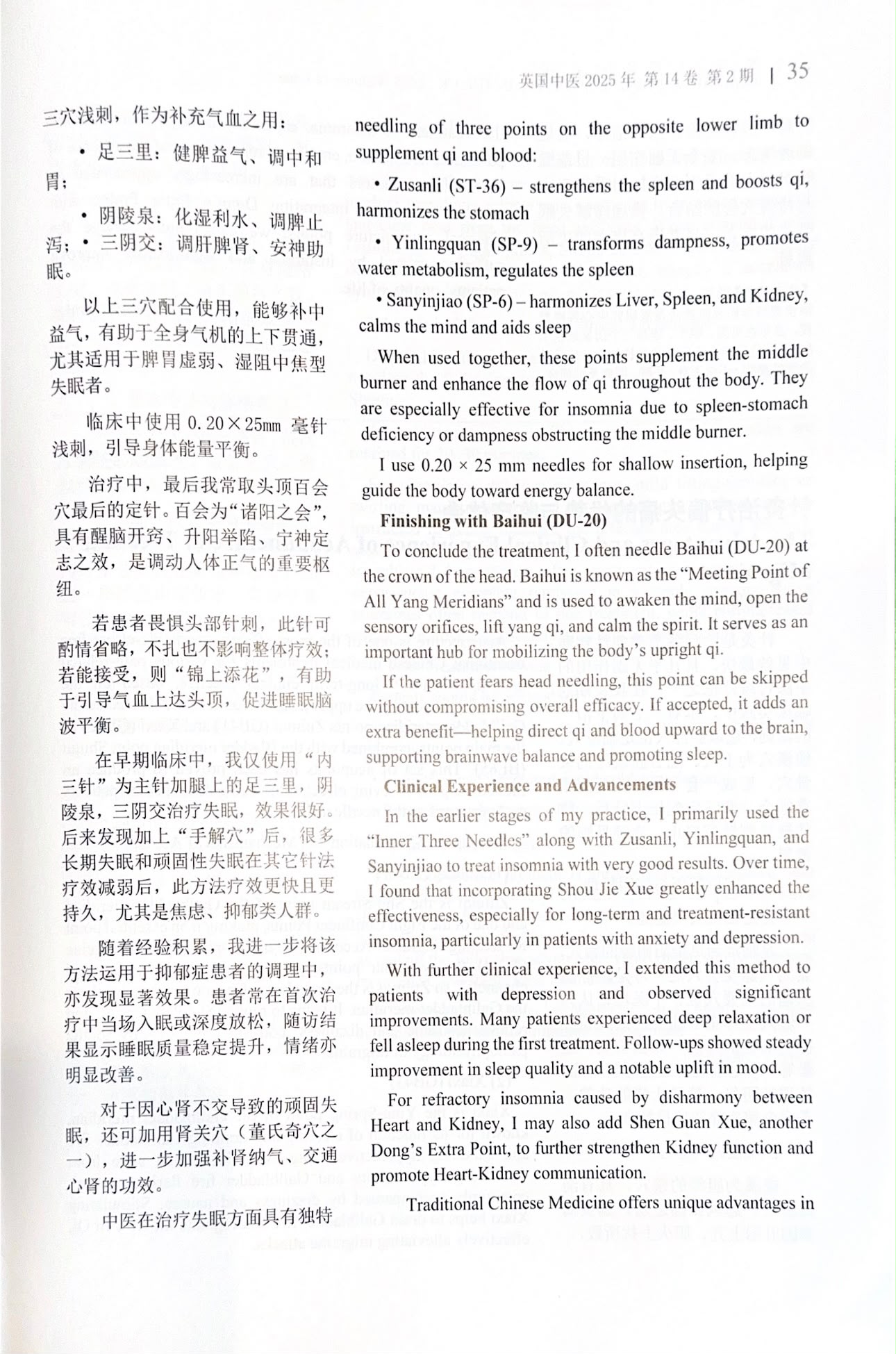
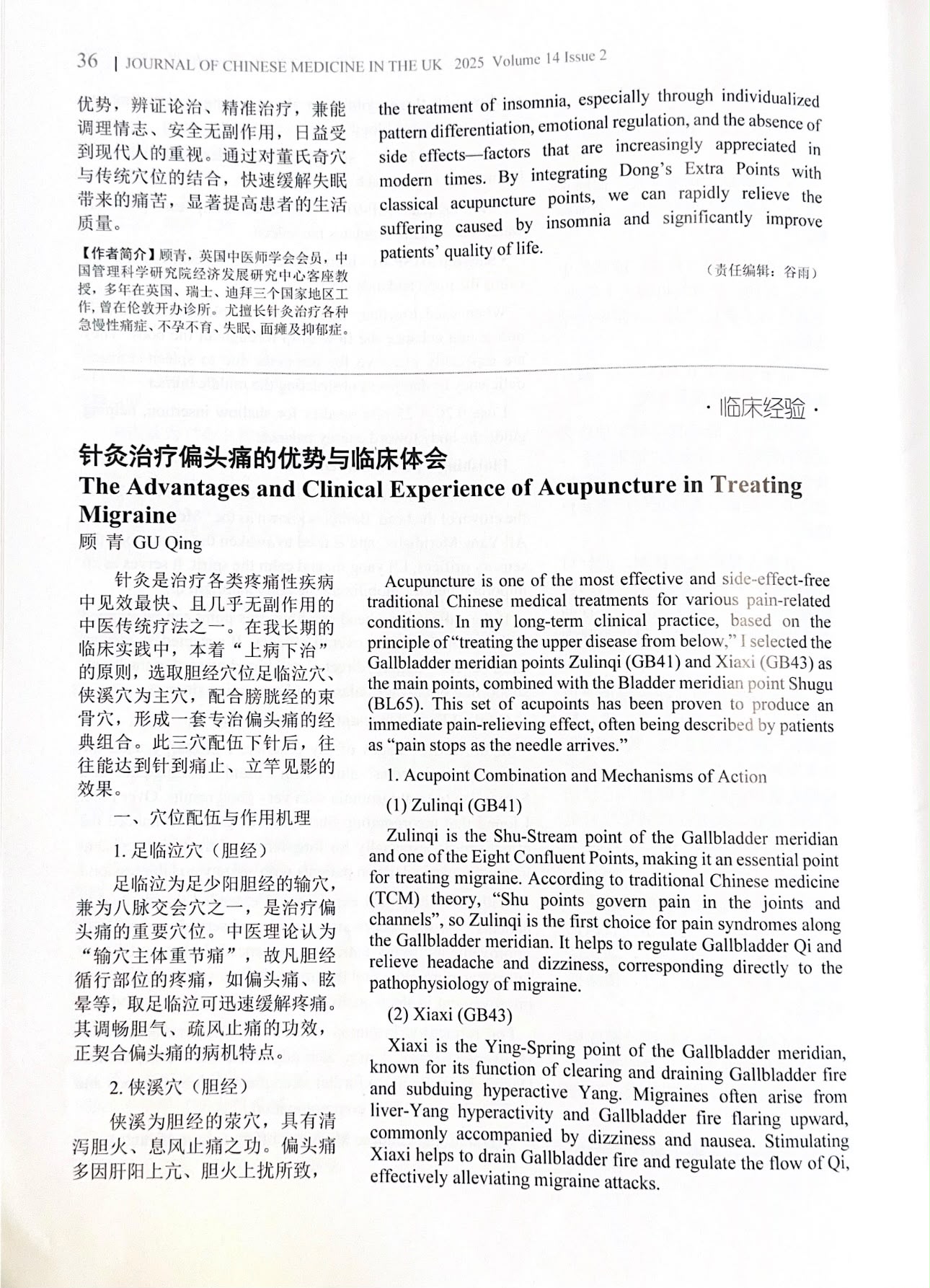
Original Publication
The following images reproduce the original article as published in the Journal of Chinese Medicine in the UK, 2025, Volume 14, Issue 2, pp. 33–36.